ChatGPT Dots Alternatives: 7 Always On Agents, Local and Cloud
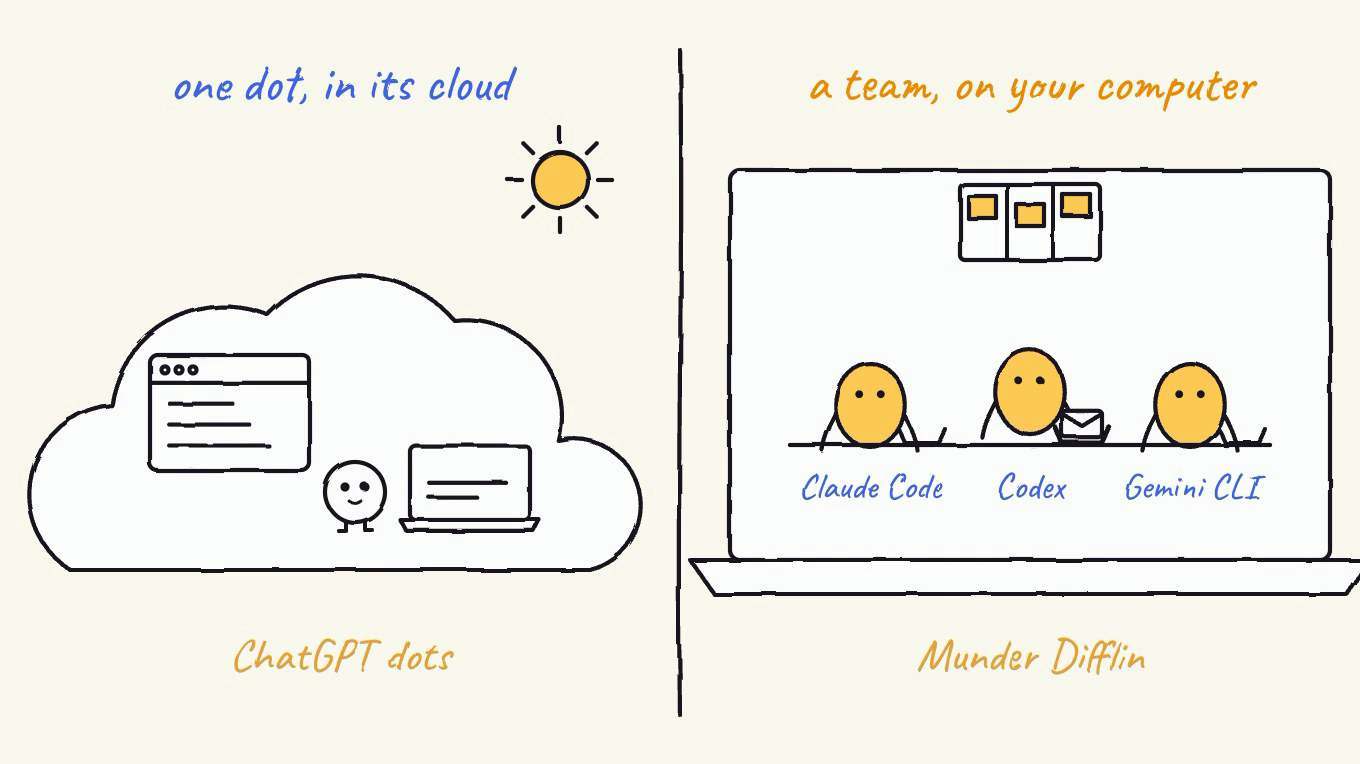
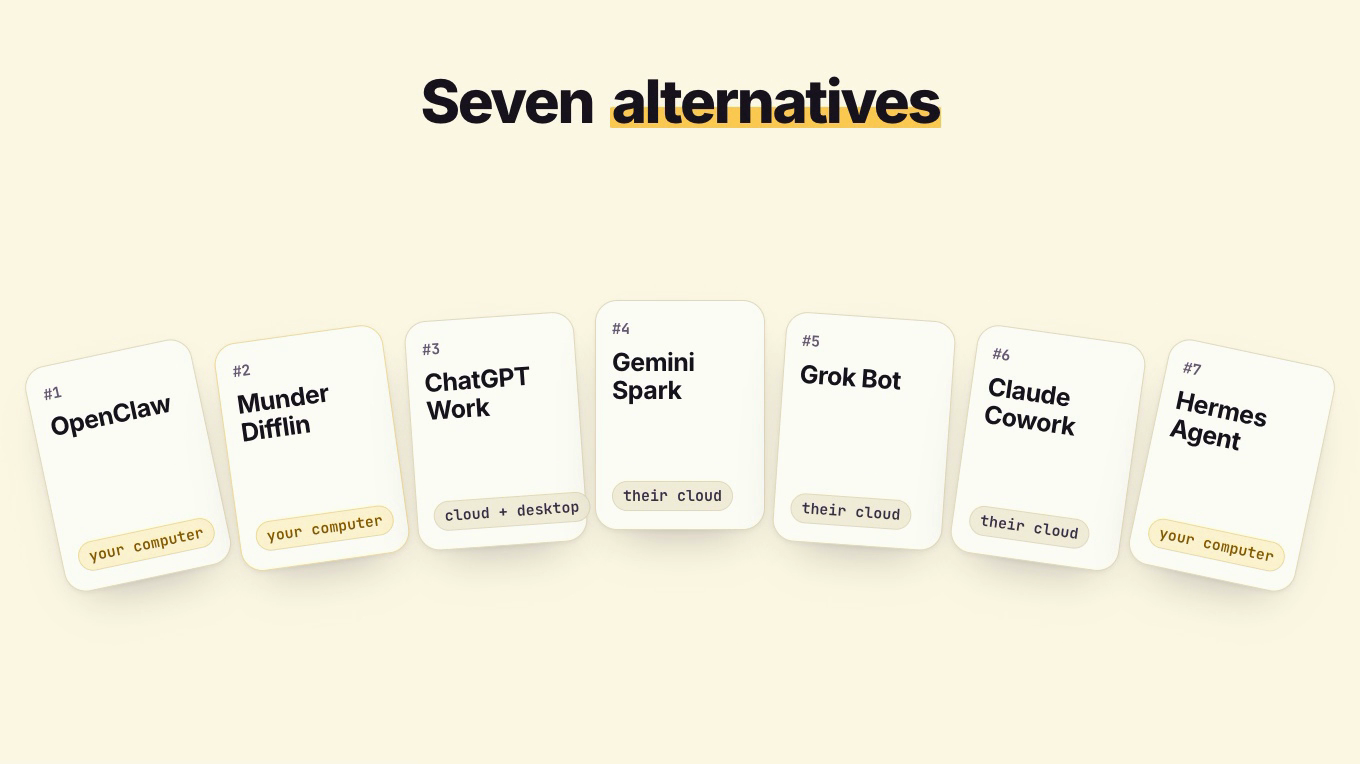
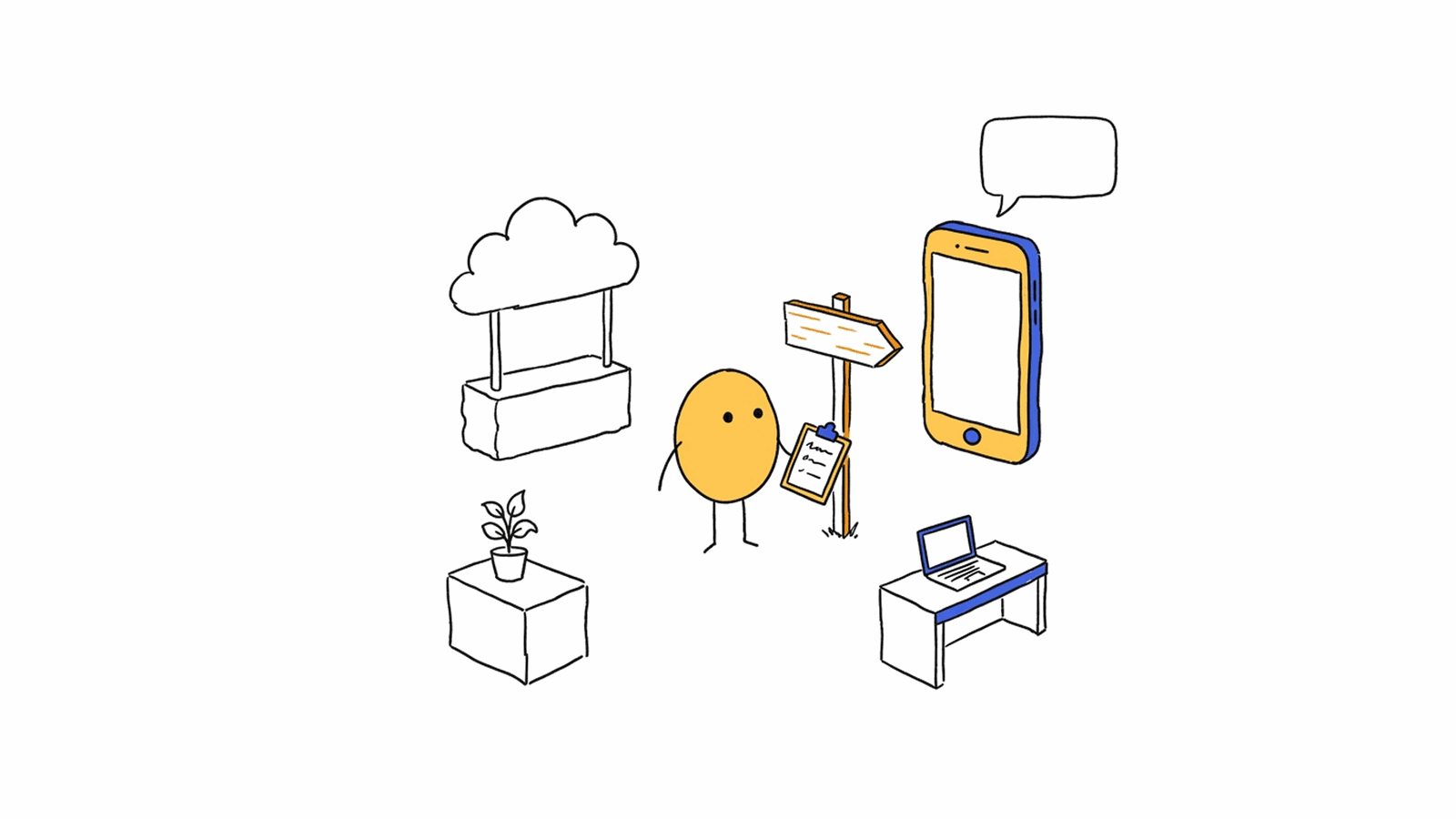
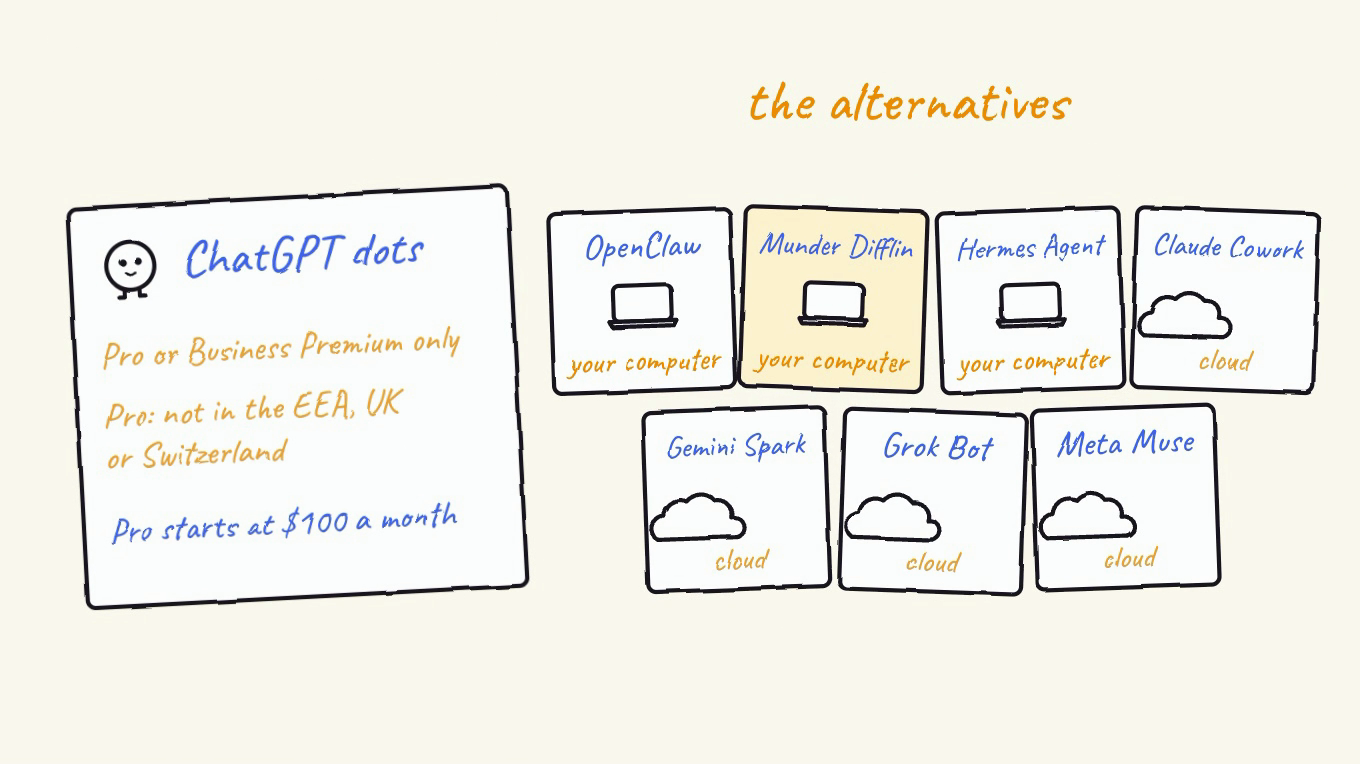
Personal ChatGPT dots need Pro from $100 a month and skip the UK and EU. Seven alternatives, sorted by where they run: your computer or a vendor's cloud.
Comparisons
Read →
Tag
22 posts tagged Local-First.
Personal ChatGPT dots need Pro from $100 a month and skip the UK and EU. Seven alternatives, sorted by where they run: your computer or a vendor's cloud.
ChatGPT dots vs Munder Difflin: one hosted agent on OpenAI's cloud, or a free, open source team of agents on your own computer. Checked 30 Sep 2026.
Meta Muse is US only and trains on your chats by default. Seven alternatives, from open source agents that run on your own computer to hosted ones from OpenAI, Google and SpaceXAI.
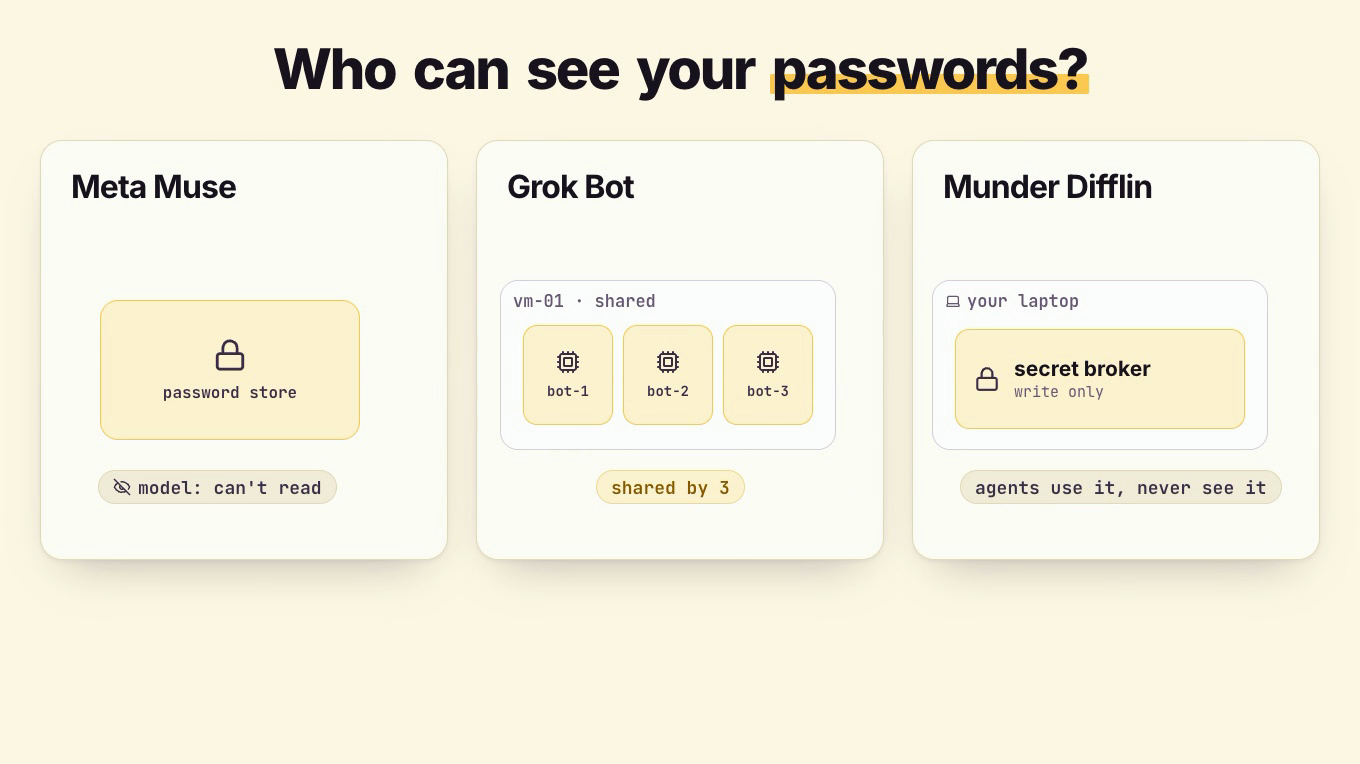
Meta Muse and Grok Bot both ask for your logins. We read both companies' security docs: who sees your passwords, what trains on your chats, and how to keep AI agents on your own computer instead.
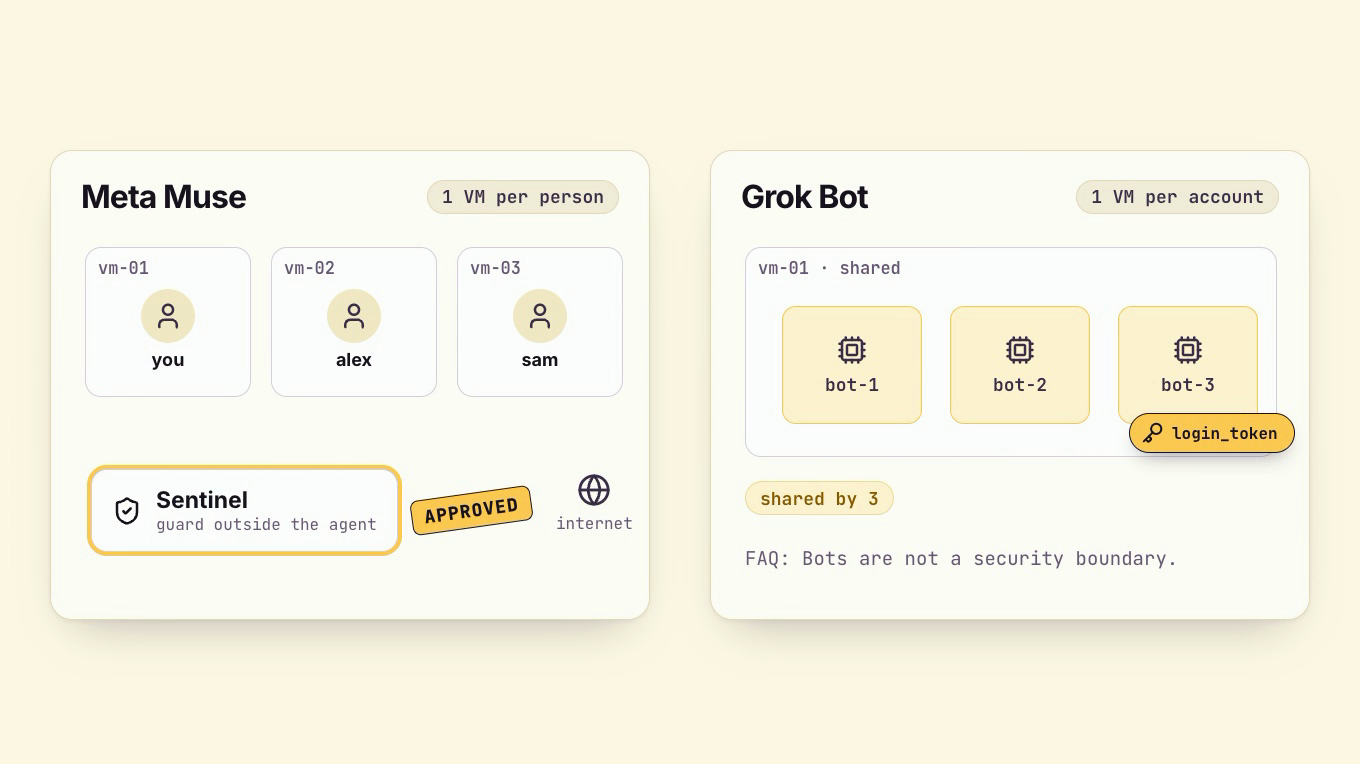
Meta Muse and Grok Bot both give an AI agent its own cloud computer. We compared price, security, platforms and who each one is for, plus the free option that runs on your own machine.
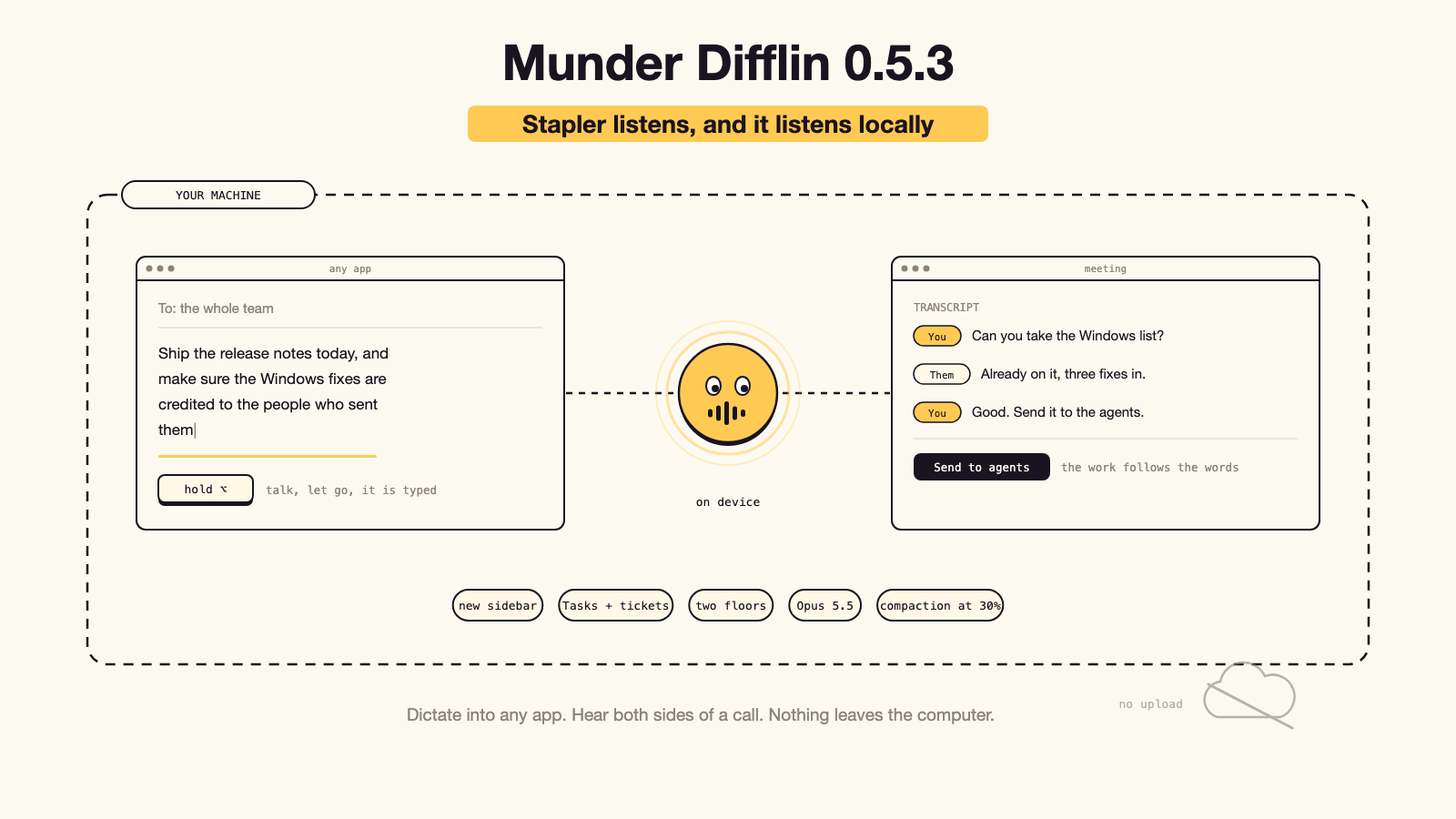
0.5.3 turns the Stapler into dictation for any app and a meeting recorder that hears both sides of a call, all on your machine. Plus the new sidebar, a Tasks tab with real ticket keys, two floors on one computer, Opus 5.5 as the default, and a long list of fixes.
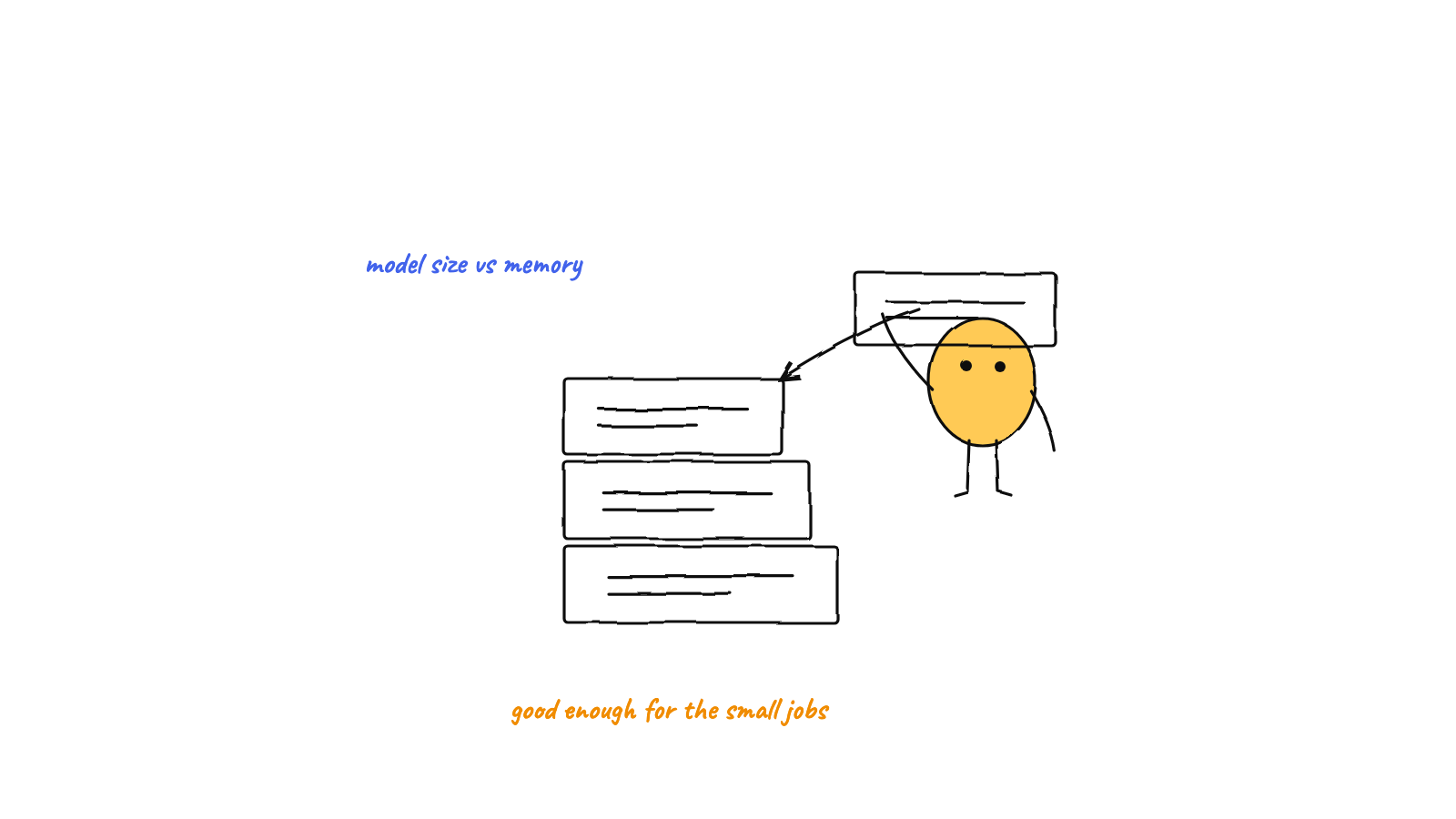
Ollama only runs the model, so the answer depends on which one you pull and your memory. What local models do well, where Claude wins, and a verdict.
Grok Bot runs every Bot on one shared cloud computer in the US. Nine alternatives checked on 30 Sep 2026, from ChatGPT dots to open source agents you run.
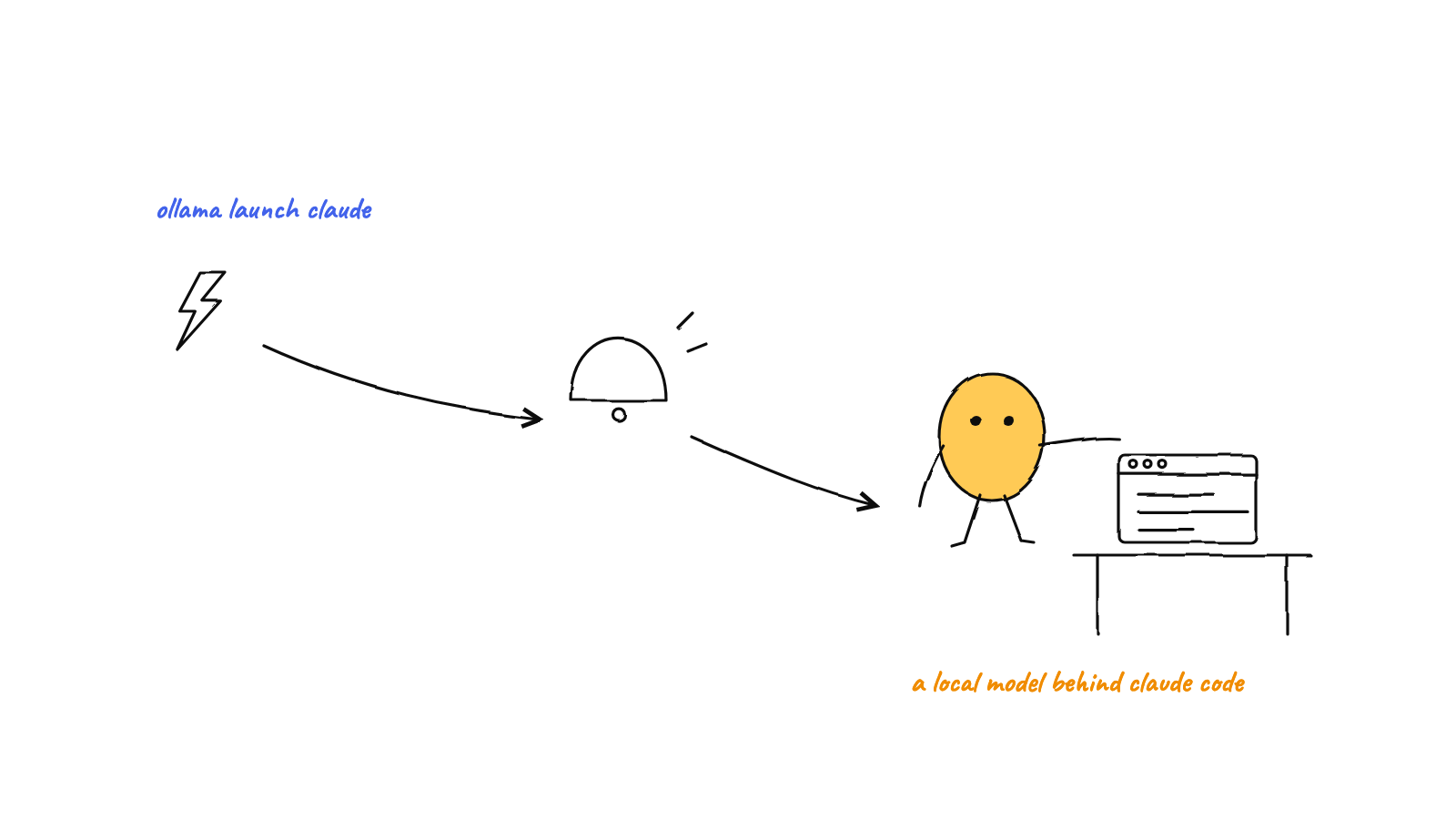
Point Claude Code at Ollama with ollama launch claude or three environment variables, give the model 64K of context, and know what stops working.
A practical walkthrough of Munder Difflin v0.3.3's built-in Monaco IDE: the title-bar IDE button, the git CHANGES rail with side-by-side diffs vs HEAD, the file tree, tabs, Cmd/Ctrl+S save — and the agent review workflow it enables.
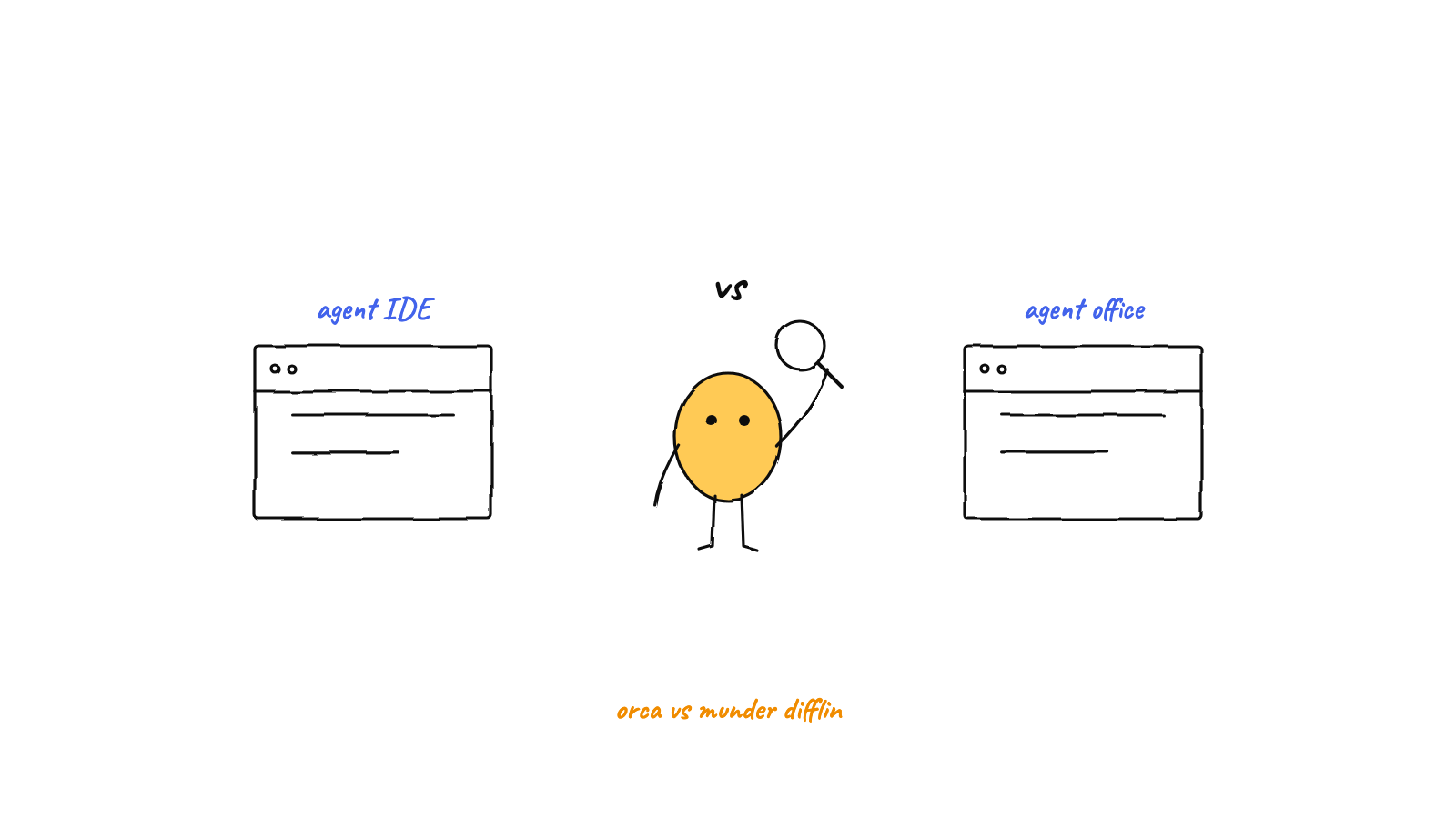
Orca is a YC-backed Agent IDE for driving coding agents side by side in isolated worktrees. Munder Difflin is an agent office that runs itself. An honest comparison of the two — and when each one is the right pick.
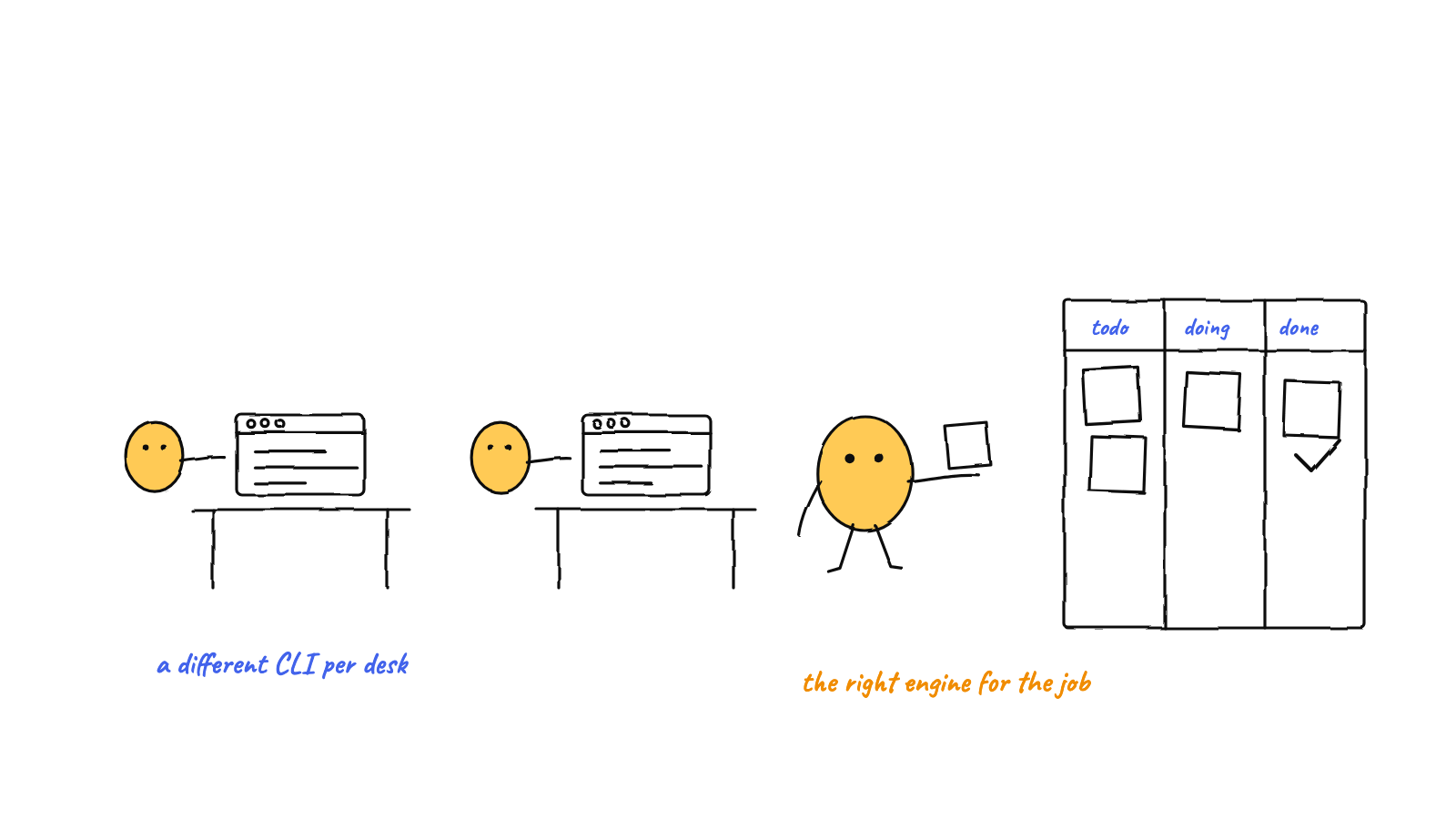
A practical guide to mixing agent engines on one Munder Difflin floor: Claude Code as orchestrator, Codex for coding bursts, Copilot for dispatched tasks, and OpenCode/Crush/pi.dev for BYOK keys and local models.
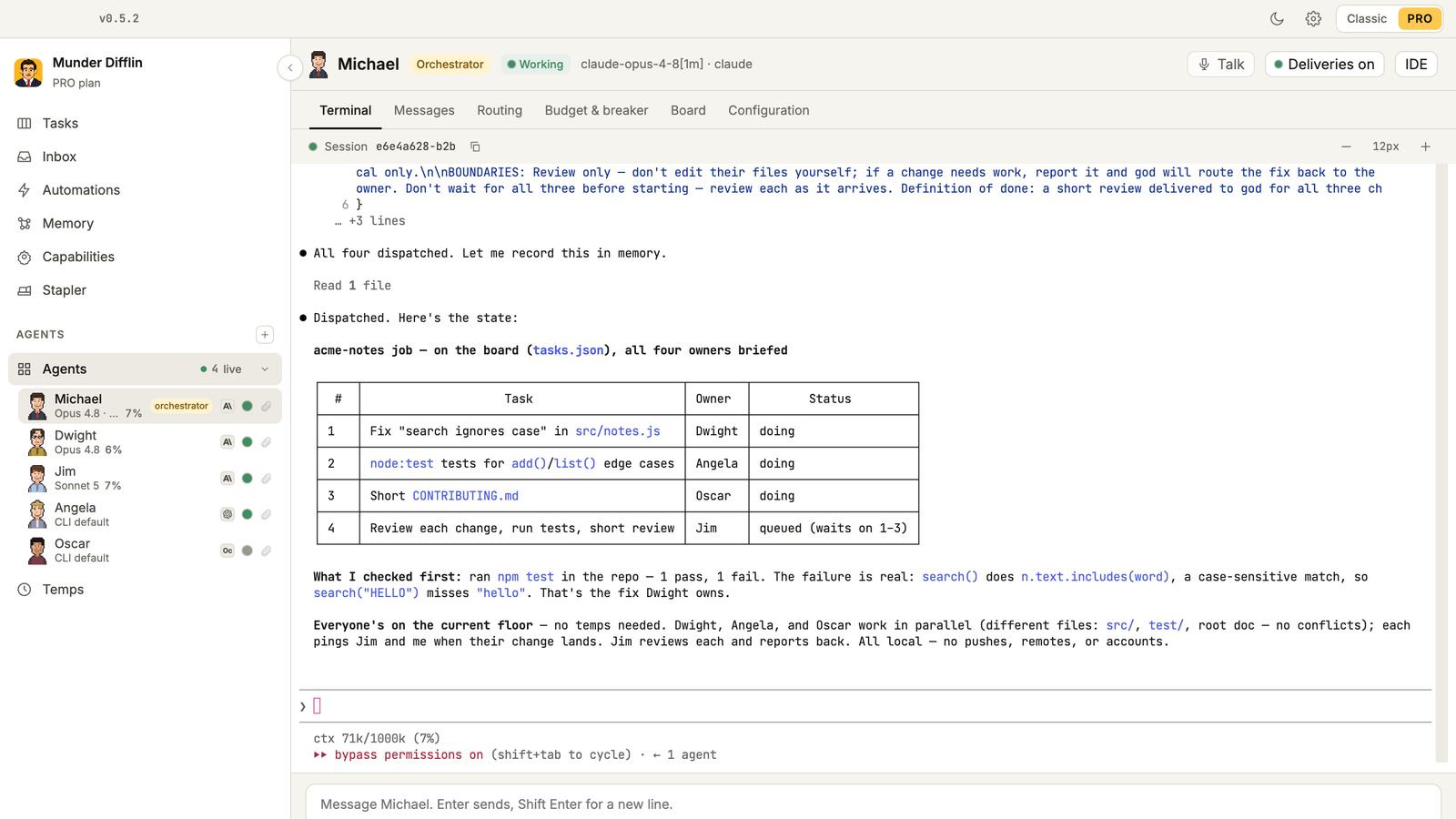
Munder Difflin 0.5.2 from download to a working Pro office: install Claude Code, Codex or OpenCode, sign in, go Pro, then automate reviews, Slack and email.
Run a whole Munder Difflin office offline on an Apple silicon Mac mini: size the model to your unified memory, install Ollama or LM Studio, and wire OpenCode, Crush, Qwen and Pi to it. Current as of Munder Difflin 0.5.2 and the M6 and M5 Pro Mac mini.
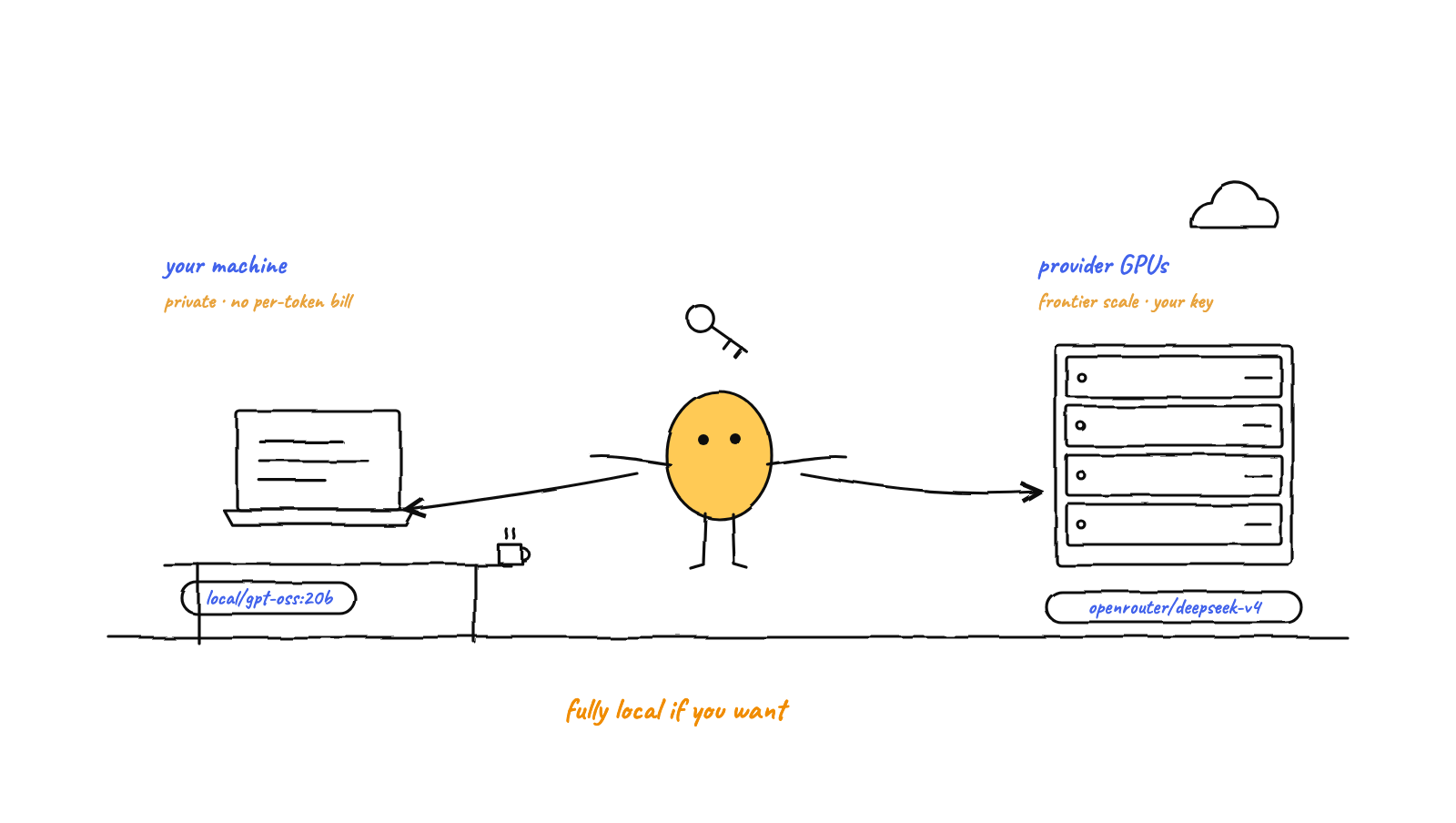
Munder Difflin can run your whole agent floor on open weight models like gpt-oss, Qwen3, DeepSeek, Llama, GLM and Kimi: fully local with Ollama, LM Studio or vLLM, or through a provider with your own key. The wiring for each engine, current as of 0.5.2.
CLI agents are powerful because they have terminal-level access: they run builds, tests, and git, and verify their own work by executing it. Here's why that matters — and the concrete ways Munder Difflin cuts token consumption while doing it.
From June 15, 2026 the Claude Agent SDK gets a separate credit. Munder Difflin drives the native Claude Code CLI, so your hive runs on your plan as before.
A fair comparison of Cline and Munder Difflin — an in-editor BYOK coding agent vs a local multi-agent orchestration hive — and when to pick which.
How local-first AI agent orchestration works under the hood — the loop, mailboxes, scheduler, and audit log that coordinate a hive on one machine.
Local-first agent hives vs the 2026 cloud agent SDK wave (OpenAI, Google ADK, Microsoft, MCP/A2A): what each optimizes for, and when to pick which.
Agents touch your code, keys, and memory. That's why agent tooling should be open source and local-first — so you can verify it, not just trust it.
The control, privacy, and cost case for keeping your AI agents and their memory on your own machine — and what cloud orchestration quietly costs.