Herdr Alternatives: What to Pick and Who Each One Fits
Herdr alternatives checked on 14 Sep 2026: tmux, Munder Difflin, Claude Squad, cmux, Orca, Conductor, Superset and Emdash, and who each fits.
Comparisons
Read →
Tag
12 posts tagged Tools.
Herdr alternatives checked on 14 Sep 2026: tmux, Munder Difflin, Claude Squad, cmux, Orca, Conductor, Superset and Emdash, and who each fits.
OmniAgent is really Omnigent, the open source meta harness from Databricks. Alternatives checked on 14 Sep 2026, and who each one fits.
An honest September 2026 comparison of YC's qm and Munder Difflin. qm is a multiplayer agent harness a company deploys for Slack and the web. Munder Difflin runs an office of your clones on your own machine, with Teams to connect them.
The best AI coding agents on 29 Sep 2026: Claude Code, Codex, Cursor, Copilot, OpenCode, Cline and more, compared by licence, price and where they run.
An honest September 2026 roundup of tools for running several Claude Code agents: Claude Code agent teams, Claude Squad, Conductor, Nimbalyst, Emdash, Vibe Kanban and Munder Difflin, and how to pick one.
Claude Code orchestration tools compared on memory, messaging, visibility, control, and local-first — across Claude Squad, Conductor, Crystal, and more.
Claude Squad vs Munder Difflin: a lean terminal session manager against a memory-backed, orchestrated, visual hive. Feature table and an honest verdict.
What Claude Squad does well, where it stops, and why a memory-backed, orchestrated hive may be the Claude Squad alternative you're after.
Conductor is a polished macOS app for parallel Claude Code worktrees. When to pick a cross-platform, orchestrated hive as your Conductor alternative.
Crystal runs parallel Claude Code worktrees well. Where a memory-backed, orchestrated hive changes the workflow — and when to stick with Crystal.
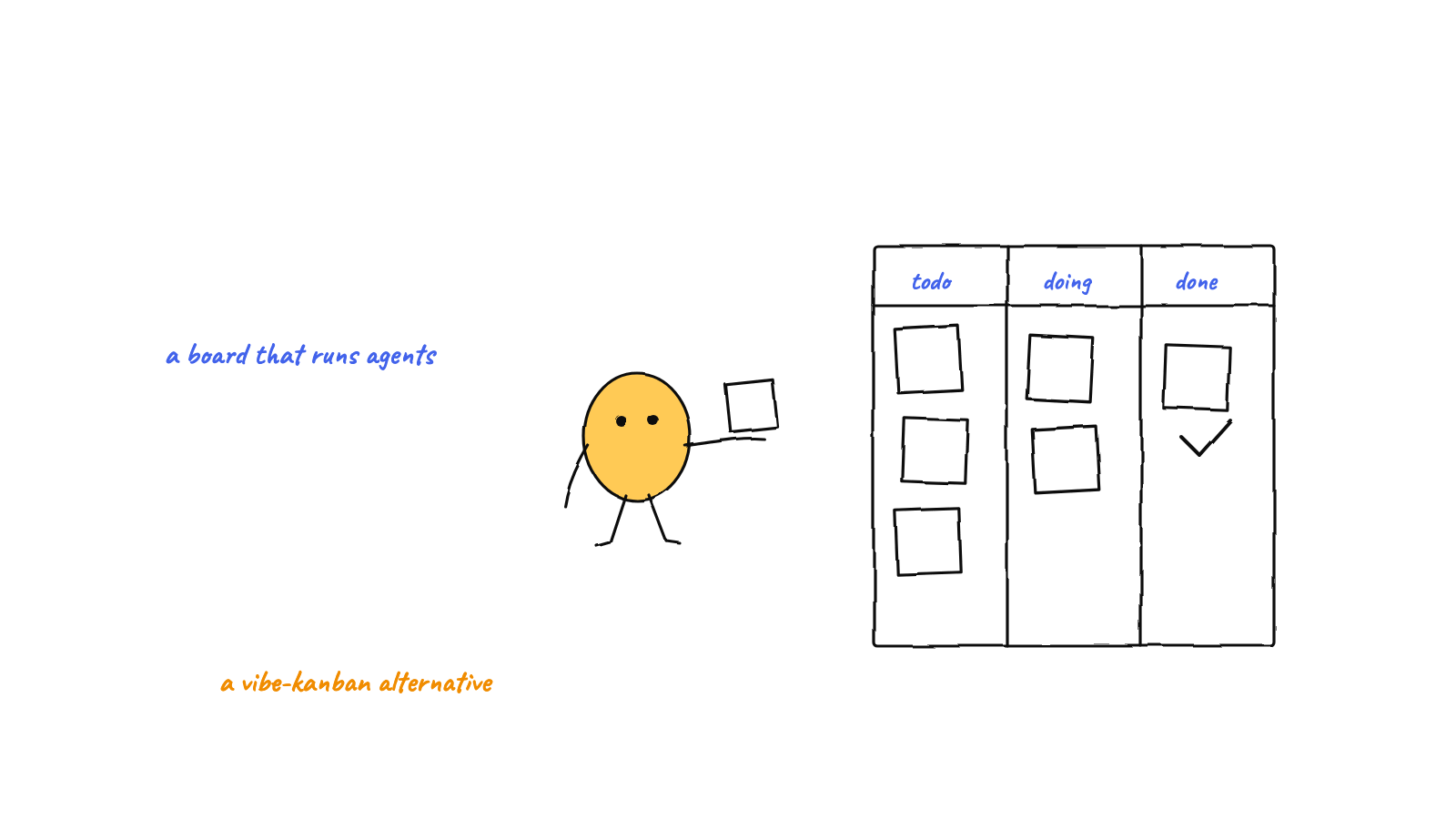
vibe-kanban gives you a board to assign tasks to coding agents. When a self-routing hive is the better vibe-kanban alternative — and when a board wins.
A decision framework for choosing a multi-agent coding tool — memory, control, visibility, cost, local-first — with a simple scoring rubric you can run.